| |
Heritage & Traditional Arts Program
Heritage & Traditional Arts Grants Coordinator: Kayla Schweitzer
Kayla.Schweitzer@dncr.nh.gov, (603) 271-0795
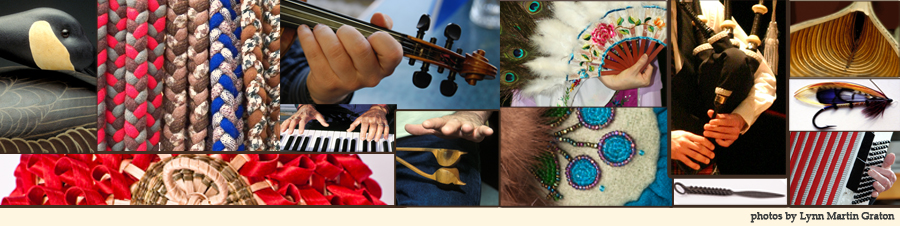
Traditional art forms are those art forms, passed informally from generation to generation through demonstration, conversation and practice that reflect the culture of a particular community defined by ethnic heritage, occupational, religious, geographic, way of life, language or familial groups.
To achieve the current NHSCA Strategic Plan (2019-2021) Goal 3- “Identify, Preserve, and Promote New Hampshire’s Heritage, Cultural Diversity and Traditional Arts,” NHSCA will:
- Honor excellence in the traditional arts
- Assist in the perpetuation of traditional arts by supporting artists who teach others
- Identify and document traditional arts and artists in order to provide an accurate foundation for arts and cultural programming in NH
- Create and support educational opportunities, presentations and materials for the public that promote deeper understanding of the aesthetics, techniques, and cultural significance of traditional arts
- Assist non-profit organizations and educators in NH to develop or sustain programming that features the traditional arts that are important to NH communities
- Promote increased public and private support for the traditional arts and artists
- Create an archival collection of resource information on traditions in NH that is available for future generations
Heritage & Traditional Arts Grants
Traditional Arts Apprenticeship Grants assist in the preservation of traditional/heritage-based arts by funding a master traditional artist to teach a qualified apprentice in one-to-one sessions.
Folklife and Traditional Arts Project Grants Matching grants to support both ongoing and new projects that focus on presenting, cultivating, documenting, and preserving folklife and traditional arts in New Hampshire.
New Hampshire Folklife Collection
Traditional arts and artists in NH are documented in a variety of ways, including still photography and audio interviews. These materials become part of a working research collection that preserves the state's heritage and provides a basis for special educational publications and projects. We are in the process of identifying, cataloging, and organizing our extensive materials into a common database. They have not yet been sent to a public archive, but a schedule of regular transfers will be established in the near future.
Resources
The NH Folklife Website is an educational resource full of information on the diversity of traditional arts and folklife in New Hampshire including a calendar of cultural heritage events across the state, learning resources, essays, games, a searchable music database, and much more!
The State Arts Council promotes traditional artists and connects them to communities through the Traditional Arts & Folklife Listing, an online directory of traditional artists, cultural specialists, and folklorists who are available for community-based presentations around NH.
NH Heritage and Traditional Arts Blog
Twitter: @NHTradArts
Last updated:
March 4, 2020
|
|